
What is an Accessory Dwelling Unit, or ADU? If you have been researching granny flats, in-law suites, guest houses, garage apartments, backyard cottages, or tiny homes and still feel unsure what actually counts as an ADU, that confusion is normal.
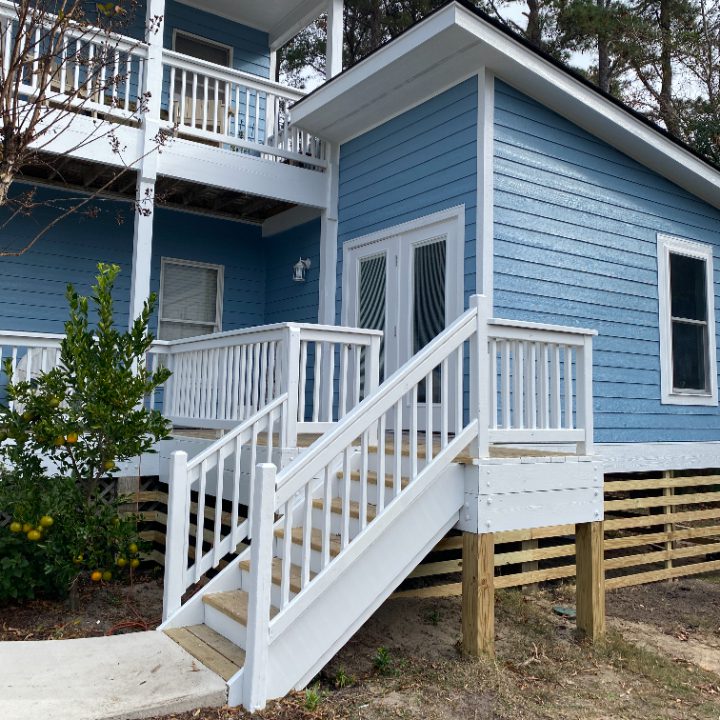
In Dare County, Currituck County, Camden County, and the Elizabeth City area, an accessory dwelling unit is basically a secondary living space on your existing property.
Accessory Dwelling Unit Defined
An accessory dwelling unit, or ADU, is a secondary living unit on the same lot as your main house. It is a real dwelling space, not just extra square footage. It typically includes its own entrance, bathroom, sleeping area, and kitchen or kitchenette.
A homeowner may call it an in-law suite. A realtor may call it a guest house. A builder may call it a garage apartment. The County may call it an accessory dwelling unit. Someone online may call it a tiny home, even when that is not legally the same thing at all.
More important than the definition is the value and benefit to homeowners. An ADU is a way to make your property work harder for your life. It can support family, create flexibility, add privacy, or help offset costs, but only if it fits the lot, the structure, and the local rules.
Common names people use
In everyday conversation, homeowners often mean “ADU” when they say:
- Granny flat
- In-law suite
- Guest house
- Backyard cottage
- Garage apartment
- Carriage house
- Casita
- Beach box conversion
- Granny pod
- Home within a home
These terms are useful because they describe the idea people have in mind. They are not always useful for permits, code review, or zoning analysis.
If you are talking about a self-contained second living space on the same lot, you are usually in ADU territory.
What makes something a real ADU?
For a space to function as a true ADU, it generally needs to meet several tests:
- It must be on the same lot as a primary residence.
- It must be designed as a self-contained living space.
- It must comply with local zoning and building requirements.
- It often must satisfy utility and occupancy constraints, including septic where applicable.
- It must be permitted and inspected as required by the local planning and inspection offices.
What an ADU is not…
An ADU is not just any finished area on the property. It is not automatically a lower-level enclosure under a beach house. It is not a detached workshop with a sofa and mini fridge or a n shed conversion someone saw online. It is not automatically a short-term rental just because it has a bed and a bathroom. While NC allows accessory dwelling units, the rules can vary by neighborhood, town, and county.
Tiny home versus ADU
A tiny home usually describes size. An ADU describes function, placement, and legal status.
Some tiny homes are movable and built on wheels. Some are not constructed to the same standards as a permanent residential structure. That does not make them bad. It just means they do not automatically qualify as an accessory dwelling unit on a residential lot. These types of homes are generally not permitted in northeastern NC.
An ADU, by comparison, is generally a permanent secondary dwelling that has to fit local development rules and code requirements. In places like Grandy and Kill Devil Hills, the code language makes that distinction important by tying ADUs to specific standards for occupancy, size, and approvals.
So if you are comparing the two, here is the practical takeaway:
- A tiny home may be a product.
- An ADU is a property-based housing solution.
- A tiny home may be movable.
- An ADU is permanent.
- A tiny home may or may not meet code.
- An ADU has to meet code and have proper permitting and inspections.
Why do homeowners look into ADUs at all?
Homeowners usually do not start with the term ADU. They start with pressure.
Maybe you want a parent nearby, but not under the same roof. Or, maybe you have an adult child who needs a stable place to land. Perhaps your property costs keep climbing, and you want a second unit that creates options.
In Dare County, many homeowners look at “beach box” style homes and wonder if the lower level can be turned into a separate living unit. Sometimes it can. Sometimes floodplain, code, occupancy, or septic limitations make the answer more complicated.
In Currituck County, Camden County, and the Elizabeth City area, the conversation often shifts. Larger lots, detached garages, attic spaces, and backyard placement create different opportunities. Garage apartments, backyard cottages, and stand-alone guest house concepts show up more often in those areas.
The right ADU strategy in Kitty Hawk or Kill Devil Hills may not be the right strategy in Camden or Elizabeth City. Same broad goal, different property realities.
The local constraints that matter
If you want a useful first-pass evaluation, focus on the constraints that shape the project early.
Ask these questions:
- Does zoning allow an ADU on this lot?
- How large can it be?
- Will septic support the added occupancy?
- Are there floodplain or placement issues?
- Is the intended use long-term housing, guest use, family use, or something else?
Those are not minor details. They determine whether the idea stays practical.
For example, Dare County allows one ADU per lot and sets a general size cap of 50 percent of the primary structure ranging from 600 to 1,200 square feet (unless a zoning district sets a different limit). Kill Devil Hills is tighter. KDH limits ADUs to 800 square feet or 50 percent of the primary residence, whichever is less, and ties them to long-term occupancy rather than short-term vacation use.
What good planning looks like
Good ADU planning is not about rushing to a floor plan. It is about defining the job the space needs to do.
- Identify the real purpose. Is this for family, housing flexibility, work, future rental, or aging in place?
- Compare the likely options. Would an ADU work best, or would an addition, reconfiguration, or garage conversion solve the problem more cleanly?
- Evaluate the site. Look at access, parking, setbacks, utilities, privacy, and structure.
- Check the constraints. Review septic, zoning, occupancy, floodplain issues, and size limits.
- Only then move toward design.
This sequence keeps you in control. It also filters out the shortcut mindset that causes many homeowners to waste money early.
An ADU makes sense when the space can do real work for your property and your life. It should solve a problem, fit the lot, and hold up under local rules.
Final thought
If you have been asking what is an accessory dwelling unit or researching terms like in-law suite, guest house, garage apartment, beach box conversion, or tiny home, you are not alone.Determining feasibility is critical. You must understand what your property can actually support and what kind of space will serve you best over time.
If you want to talk through your specific situation in Dare County, Currituck County, Camden County, or the Elizabeth City area, simply submit a project inquiry. As the area’s only nationally recognized ADU builder and designer, we always start with a basic, no pressure feasibility conversation. We are happy to discuss whether an accessory dwelling unit is possible and if it will help solve the problems you need it to.
Click HERE to check out our favorite ADU from last year!