
Outer Banks kitchen remodels require homeowners to understand the realities of the coastal kitchens… and why that Pinterest pin may not be the best choice for your coastal NC home.
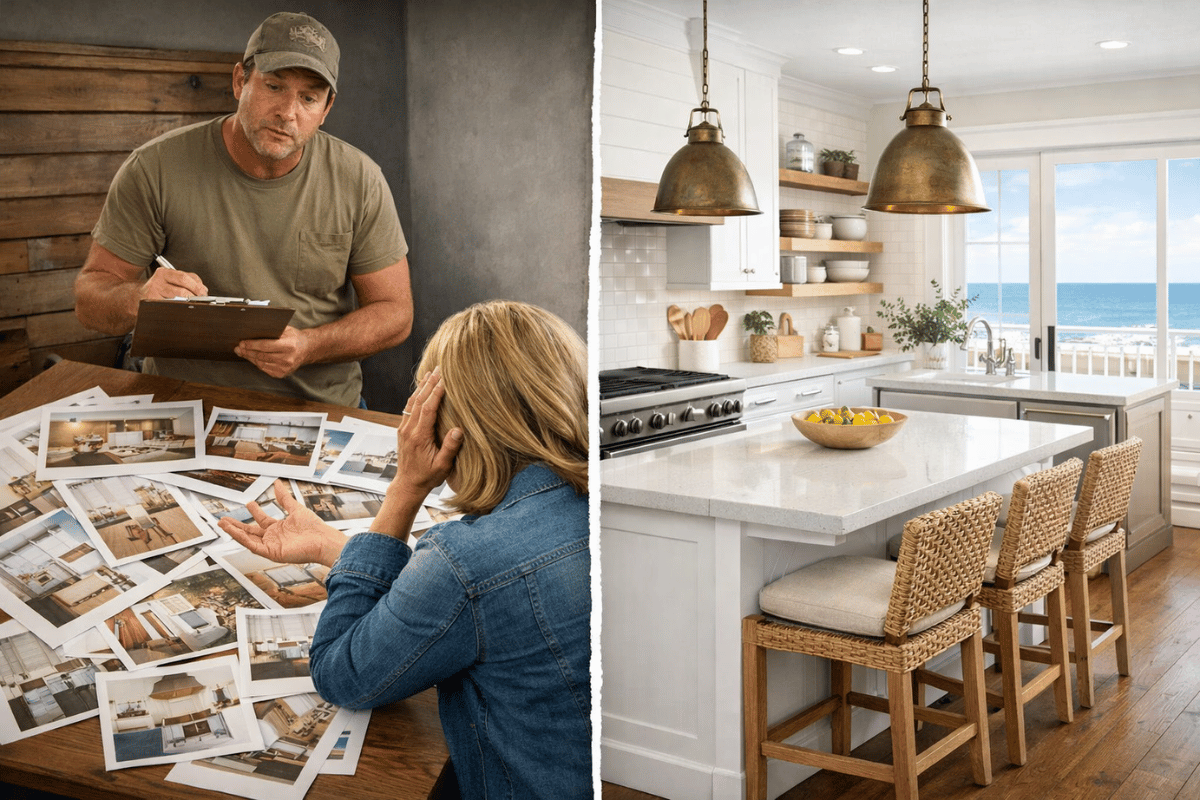
it’s not unusual for new clients to bring trending ideas into remodeling conversations when remodeling their Duck or Kill Devils homes. Warm wood tones. Statement range alcoves. That limestone backsplash everyone’s posting. But here’s the question that probably keeps you up at night: will any of this hold up three houses from the ocean?
Kitchen trends move fast. When it comes to Outer Banks kitchen remodels, what works inland doesn’t always translate to coastal construction. The gap between a beautiful photo and a functional kitchen that survives salt air, humidity, and the realities of permitting in Dare or Currituck County can cost you time, money, and a lot of frustration.
What Homeowners Usually Assume about outer banks kitchen remodels
Most people think kitchen remodeling means picking finishes and waiting for installation. They assume trends are universally applicable. Surely, any material shown on Houzz will work in any location, right? Some tend to believe that kitchens are purely aesthetic decisions, and that if it looks good online, it’ll work in their home.
What Actually Matters in Coastal Kitchen Planning
Your Outer Banks kitchen remodel success depends on three things that have nothing to do with how many saves a photo gets: structural reality, material performance in coastal conditions, and planning sequence.
Structural reality means understanding what your existing house can support. If you want to remove a wall for that open concept everyone loves, you need to know whether it’s load-bearing, what the header requirements are, and whether your foundation can handle the load redistribution. In elevated coastal homes built on pilings, this isn’t always straightforward.
Material performance separates Instagram inspiration from long-term satisfaction. Warm wood cabinetry looks stunning, but not all wood species handle humidity the same way. That unlacquered brass hardware will patina beautifully or corrode quickly depending on finish quality and exposure. Natural stone needs sealing schedules that change based on salt air exposure. If this is a rental, what does this mean with quick turnovers and wear and tear from guests?
Limestone backsplashes, which are one of the biggest trends right now, are porous and acid-sensitive. Spilled lemon juice or tomato sauce can etch the surface. In coastal humidity, they need consistent maintenance. That doesn’t mean you can’t have one. It means you need to know what you’re signing up for.
Planning sequence determines whether your budget holds or balloons.for your Outer Banks kitchen remodel. The order should be: understand existing conditions, establish realistic scope, price materials and labor accurately, then refine design to fit budget. Not the other way around.
How This Plays Out Locally
Dare County, Currituck County, and surrounding areas add layers most trend articles don’t mention. If your kitchen remodel involves any addition or exterior modification, you’re working within flood zone requirements and elevation mandates. Moving plumbing will certainly add additional expense to your project as well.
Permitting timelines vary by jurisdiction. A straightforward interior kitchen remodel moves faster than one requiring structural changes, but you still need electrical, plumbing, and final inspections coordinated.
Salt air accelerates corrosion on anything metal that isn’t specified correctly, especially vent hoods, cabinet hardware, faucet finishes, and appliance exteriors. Coastal construction veterans know which brands and finishes actually hold up, and which ones look great in showrooms …but fail within two years.
What Good Planning Looks Like in an Outer Banks kitchen remodel
Start with an honest assessment of what you have. Not what you wish you had. Floor joists, subflooring condition, electrical panel capacity, plumbing routing, and ventilation paths. This tells you what’s possible before you fall in love with a design that requires gutting systems you didn’t budget for.
Then, establish priorities. New cabinets and countertops with existing layout? Mid-range budget. Moved walls, relocated plumbing, custom millwork? Higher end.
Match materials to your actual use and maintenance willingness. If you cook daily and have kids, that Carrara marble island might not be the move – or maybe it is, if you accept patina as character. If you’re rarely home and want low maintenance or you rent your property, quartz and porcelain give you the look with less upkeep.
Think through workflow. The working triangle isn’t a hard rule anymore, but you still need logical movement between refrigerator, sink, and cooking surface. If you entertain, consider where people gather and whether your layout accommodates that without blocking the cook’s path. In a rental property, people want to gather in the kitchen area. Make sure your property allows groups to gather.
Common Mistakes to Avoid
Designing to someone else’s cooking style rarely works. If you don’t bake, that wall of ovens is expensive square footage you won’t use. If you do serious meal prep, insufficient counter landing space next to the cooktop will frustrate you daily.
Undersizing or misplacing storage creates permanent aggravation. Upper cabinets that hang too low, pantries too narrow for sheet pans, corner cabinets without functional access solutions don’t get better with time.
Choosing finishes based purely on trend photos without asking about durability in coastal environments leads to premature failure. A finish that works beautifully in Arizona might not survive here.
Skipping the preconstruction details conversation means surprises during demolition. Once walls are open and you discover outdated wiring or plumbing that needs replacement, your budget and timeline shift. Better to investigate thoroughly up front when feasible and expect the unexpected.
How to Think About Next Steps for your Outer Banks kitchen remodel
If you’re serious about remodeling your kitchen, you need more than saved photos. You need someone to look at your actual space, understand what you’re trying to accomplish, explain what’s structurally and practically feasible, and help you sequence decisions so your budget works.
Ask yourself: do you want a kitchen that photographs well, or one that functions well for your specific household in this specific location? Usually you can have both, but the order matters.
Think about what’s non-negotiable versus nice-to-have. Where are you willing to spend, and where can you make practical choices that free up budget elsewhere?
If you want help thinking through your specific kitchen situation—what makes sense for your house, your goals, and your budget—submit a project inquiry. We’ll walk through what you have, what you’re trying to solve, and how to plan a kitchen remodel that holds up to coastal living and daily use.