
Coastal NC home additions are not always as simple as they seem, especially from Corolla to Kill Devil Hills to Buxton, unique challenges to coastal home additions must be considered.
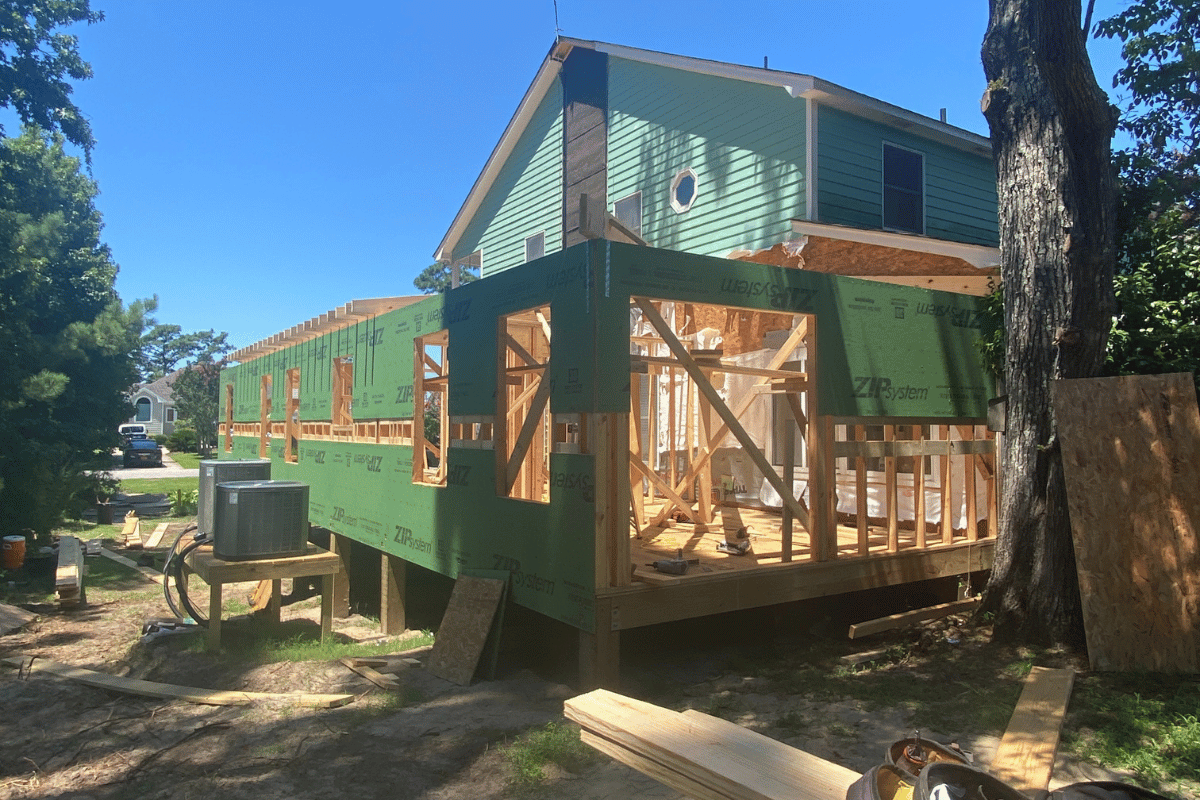
You’ve outgrown your house. Another bedroom. A dedicated office. Maybe a primary suite away from the kids’ rooms. The solution feels obvious – just add on. But somewhere between “we need more space” and “here’s a design we love,” a lot of homeowners hit a wall. The addition they pictured doesn’t fit their lot. The style clashes with the existing house. The budget doubles when site realities get factored in.
Home additions look deceptively simple in photos. It’s not “just more house” attached to your current one. What those photos don’t show is everything that determines whether a particular addition design actually works on your property.
What Homeowners Assume about Coastal NC Home Additions
People tend to think additions are modular. In other words, you can essentially pick a design and attach it. They assume their lot has room wherever they want to build. They believe matching the existing house is mostly about siding and roofline.
Many also think additions are cheaper per square foot than new construction because you’re working with existing infrastructure. While this is most often true, it really depends on your unique property and home.
What Actually Controls Addition Success
Addition feasibility comes down to site constraints, structural integration, and design coherence.
Site Constraints
Site constraints include setbacks, easements, septic field locations, utility line paths, and buildable area. Your property lines dictate how close structures can be to the edges—typically 10 to 25 feet depending on jurisdiction and zoning. If you want to add onto the side of your house but you’re already close to the setback line, that direction isn’t available.
Septic drainfields create untouchable zones. You can’t build over them, and you need clearance around them. If your drainfield runs along the back of your house where you imagined a sunroom addition, you’re designing around it or relocating it, which is an additional expense to make your addition possible.
Easements for utilities, drainage, or access can cross your property in ways that limit where additions can go. These don’t always line up with obvious markers like driveways or visible utility poles.
Structural and Code Considerations
In coastal flood zones, additions follow the same elevation requirements as new construction. If your existing house was built before current codes, it might sit lower than what’s now required. Your addition will need to meet current BFE standards, which can create awkward transitions between old and new floor levels—or require lifting the entire existing house.
Structural integration determines whether your addition feels like part of the original house or obviously tacked on. This isn’t just visual. It’s about how loads transfer, how rooflines tie together, and how systems connect.
Connecting new foundation to old requires careful engineering, especially on elevated coastal structures where you’re matching piling depths and load paths. Adding a second story over existing structure means verifying the foundation and framing can handle the additional weight. Often, they can’t without reinforcement.
Roof transitions challenge a lot of addition designs. That clean gable roof on your existing house might require complicated valley framing to tie in a new wing. Water drainage paths have to be thought through so you’re not creating new leak points or ice dam potential.
Existing System Requirements and Considerations
HVAC, plumbing, and electrical integration isn’t trivial. Running ductwork to new spaces, sizing equipment to handle increased load, extending plumbing without pressure drops, upgrading electrical panels. Unfortunately, these are real costs that don’t show up in the pretty renderings.
Design coherence separates additions that look original from ones that scream “we added this later.” It’s not just about matching materials. It’s about proportions, window rhythms, roof pitch, ceiling heights, and how rooms flow.
Trending design features that look great in new construction don’t always translate to additions on existing homes. Vaulted ceilings in an addition can feel disconnected if the rest of your house has 8-foot ceilings. Floor-to-ceiling windows create privacy and heating/cooling challenges depending on orientation and proximity to neighbors.
Popular open-concept additions sometimes create awkward relationships with the existing home’s layout. If your current house is compartmentalized with defined rooms, a wide-open addition can feel jarring rather than cohesive.
How This Plays Out Locally in Coastal NC Home Additions
From Corolla to Hatteras and everywhere in between, Outer Banks properties often involve flood elevation challenges that complicate additions. Older coastal homes built before stricter flood regulations may sit lower than current code allows for new construction. When you add on, the new space must meet today’s elevation requirements. This creates a step up from old to new, or forces you into the much larger project of elevating the entire existing structure—a six-figure decision.
Coastal wind ratings affect everything from window specifications to roof sheathing and fastening schedules. Your addition isn’t just built to normal residential standards. It’s engineered for hurricane-force winds and wind-driven rain, which affects costs and material choices in ways that inland additions don’t face.
Lot coverage limits in some jurisdictions cap how much of your property can be covered by structures. If your existing house plus driveway already approaches that limit, your addition size might be restricted regardless of how much room it looks like you have.
Historical district considerations in towns like Manteo add design review layers. Your addition needs architectural compatibility approval, which affects style choices and timelines.
What Good Planning Looks Like
Start with a property survey and site assessment. You need to know exactly where your buildable area is before designing anything. This includes setback lines, easements, septic locations, and flood zone requirements.
Have the existing structure evaluated. Can the foundation support a second story? Is the framing sound enough to tie into? Are there structural issues that need addressing before adding on? Surprises during construction are expensive; find them during planning.
Think about how the addition relates to the whole house. Walk through the flow. Where are entry points between old and new? Do ceiling heights match or transition naturally? Does the addition create dead-end rooms or improve circulation?
Match your addition’s purpose to realistic design. If you need a primary suite, you need bedroom, bathroom, closet space, and probably some buffer from other living areas. Trying to squeeze that into 200 square feet doesn’t work. Understand the minimum functional size for what you’re trying to create.
Budget for the hidden work including foundation engineering, structural integration, system upgrades, permitting, and hidden issues. These aren’t optional.
Common Mistakes to Avoid
Designing based on interior wants without considering exterior constraints leads to plans that can’t be built on your lot. The addition you love might require setback variances you can’t get, or building over septic you can’t relocate.
Ignoring how your coastal NC home addition affects the existing house creates problems. Adding load without verifying capacity. Creating roof valleys that concentrate water flow onto old roofing. Blocking natural light to existing rooms. These reduce the value and livability of your current space.
Choosing trendy design elements that clash with your home’s architecture creates a disjointed result. Ultra-modern additions on traditional coastal cottages rarely feel intentional. Work with your house’s existing character rather than against it.
Underestimating coastal-specific costs derails budgets. Elevated foundations, wind-rated materials, and flood-compliant construction aren’t the same as inland additions. Factor those realities from the beginning.
How to Think About Next Steps
If you need more space and an addition seems like the answer, the starting point isn’t floor plan sketches. It’s understanding what your property and existing structure can actually accommodate.
You need someone to assess your site conditions, existing structure, and realistic options given local requirements for your coastal NC home addition. That conversation tells you whether the addition you’re imagining is feasible, what modifications might be necessary, and what budget range actually applies to your situation.
Think about what you’re trying to gain. More bedrooms? Better separation of spaces? Improved flow? Defined living versus sleeping areas? The clearer you are about function, the better the design can serve your household.
If you’d like to talk through your specific addition situation—what’s possible on your lot, how to integrate with your existing house, and what that realistically involves—submit a project inquiry. We’ll walk through what you have, what you’re trying to accomplish, and whether an addition is the right solution or if there’s another approach that gets you where you want to be.