
Currituck and Camden home additions are a great move for growing families. Most likely, if you are considering adding an addition to your home, your house that worked fine five years ago doesn’t fit your family anymore.
Home Additions should solve real problems
The kids are bigger. Aging parents visit more often. You work from home now and need real office space. You look around at the side yard or the space above the garage and know you have room. The question isn’t whether you need more space. It’s whether adding a home addition makes sense for your property, your lot, and how your family will live for the next decade.
Many homes in Currituck and Camden were built during the housing boom with contractor-grade finishes and layouts that prioritized speed over thoughtful design. Bedrooms stacked on one side with no primary suite. One bathroom for four people. Living rooms disconnected from kitchens. Garages taking up prime real estate while families squeeze into cramped spaces. These homes were built to sell quickly, not to grow with families over decades.
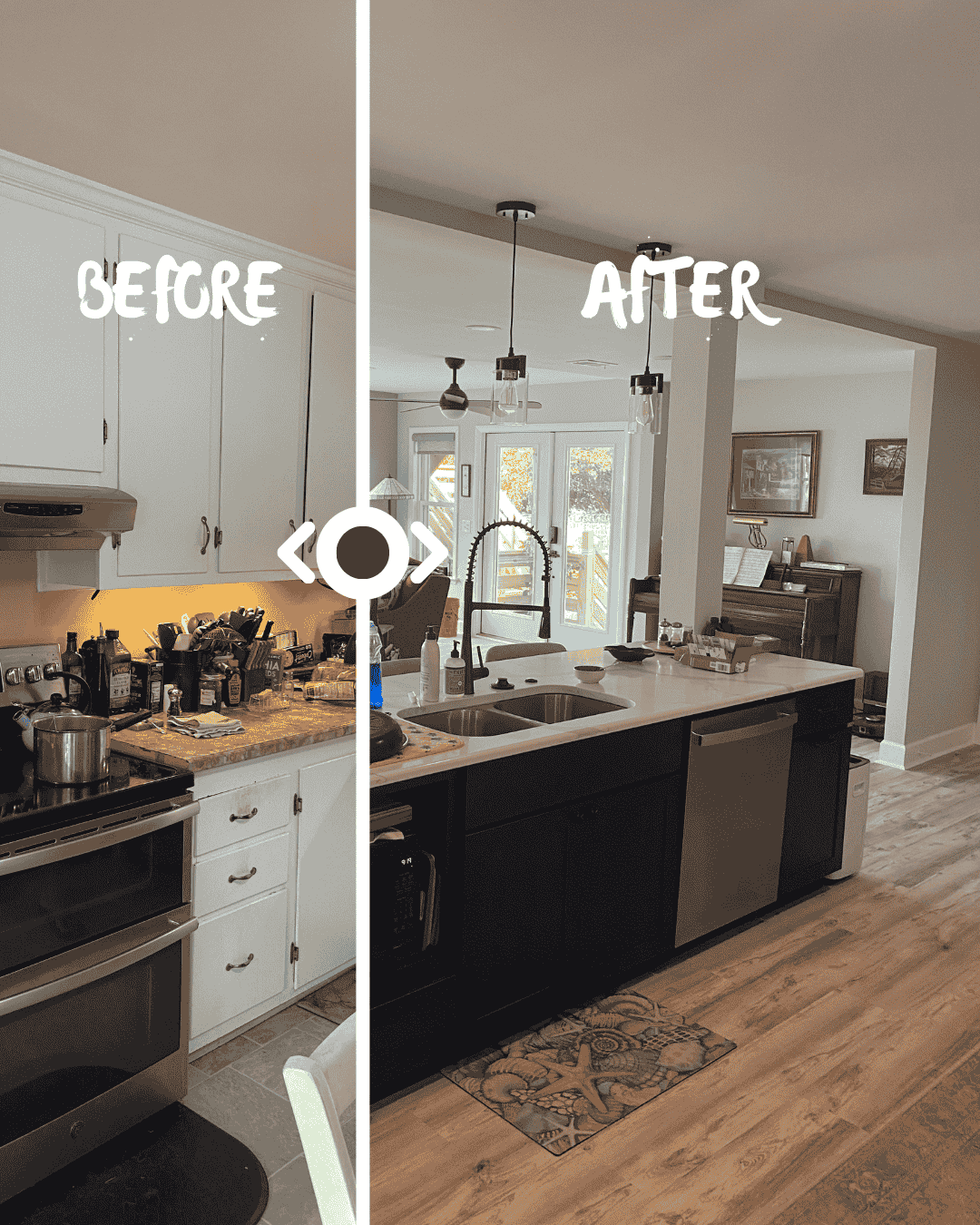
A well-planned residential home addition can transform how your family lives. It creates the primary suite you’ve always wanted, adds the extra bathroom that stops morning traffic jams, or gives you a home office that actually has a door. However, not every lot can support every addition, and not every addition makes sense for a home.
Currituck and Camden home additions: what the counties Actually Allow
Currituck and Camden home additions largely depend on both zoning and HOA restrictions. Though the counties share some similarities, they apply different rules to home additions. Both counties enforce North Carolina Building Code, but zoning regulations, setback requirements, and environmental health rules differ in ways that directly affect what you can build.
Currituck County Rules Shape Your Options
Currituck enforces specific dimensional requirements that control how close you can build to property lines:
- Front setbacks in many residential zones require 50 feet from the road
- Side setbacks typically require 10 to 15 feet depending on your zoning district
- Corner lots face additional restrictions with corner side setbacks often matching front setback requirements
Lot coverage limits also matter. Many residential zones cap how much of your lot buildings and structures can cover. If your existing house, garage, and driveway already consume significant area, you have less room to add on than you think.
Septic capacity becomes the constraint most homeowners don’t consider until they’re deep into planning. Adding bedrooms requires your existing septic system to have capacity for additional load. Many older homes in Grandy and Powells Point were permitted for three or four bedrooms. Adding a fifth bedroom often requires septic system evaluation and potentially expensive upgrades or replacement.
Camden County Takes a Different Approach
Camden County follows similar building code requirements but applies different local rules for setbacks and lot development. Environmental health permitting for septic systems requires careful coordination, especially when bedroom count increases.
Camden’s more rural character means many properties sit on larger lots. This provides more flexibility for additions. However, well and septic requirements still govern where and how you can build. Wells must maintain minimum distances from septic drainfields, typically 100 feet or more. This affects addition placement if you’re working with tight lot configurations.
Both counties require you to protect your septic repair area. This is the designated space where a replacement drainfield could be installed if your current system fails. You cannot build over this area. Sometimes this eliminates the most obvious spot for an addition.
Why Currituck and Camden Families Add On
Most homeowners don’t wake up one morning and decide to build an addition. The need builds over time until you reach a point where the house just doesn’t work anymore.
- Growing families outgrow bedroom counts. Your three-bedroom home in Moyock fit perfectly when you bought it. Now you have three kids who can’t share rooms anymore, or teenagers who need space and privacy. Adding a bedroom or two changes daily life dramatically.
- One bathroom creates bottlenecks. Families with teenagers or multi-generational households know this pain intimately. One or two bathrooms for five people creates morning chaos and evening frustration. Adding a full bathroom eliminates the single biggest source of household tension.
- No real primary suite exists. Many boom-era homes have a “master bedroom” barely larger than the other bedrooms with no attached bathroom or closet space. A true primary suite with a full bathroom and walk-in closet gives parent’s privacy and transforms how the home feels.
- Aging parents need accessible space. When your parents start visiting more often or need to move in, a ground-floor bedroom and bathroom becomes essential. Stairs become obstacles. Privacy matters. A well-designed addition creates comfortable space for extended family without everyone feeling cramped.
- Home offices became mandatory. Remote work changed how we use our homes. Working from the kitchen table or a corner of the bedroom doesn’t cut it anymore. A dedicated office with a door, good lighting, and separation from household noise makes work actually possible.
- Existing layouts fight how you live. Some homes have strange flow where you walk through one bedroom to reach another, or the kitchen sits isolated from where the family gathers. House additions done right don’t just add space. They fix circulation and create layouts that make daily life easier.
What Makes a Good Addition in Moyock, Barco, and Point Harbor
The best additions don’t look like additions. They look like they were always part of the house. That takes planning, attention to rooflines, window placement, and how the new space connects to existing rooms.
Your Addition Must Match Your Home’s Character
Many homes follow specific architectural styles. Ranch. Split-level. Traditional two-story. Your addition should respect that character.
Roof pitch needs to match. Siding type and color need to complement what’s already there. Window styles need to align. Exterior finishes need to feel cohesive.
A poorly planned addition sticks out. The roofline doesn’t flow. The siding color is close… but not quite right. Windows don’t align. It looks tacked on. This hurts both livability and resale value down the road.
Flow Between Old and New Matters More Than Square Footage
Adding square footage is easy. Creating space that flows naturally is harder. You need to think about several factors:
- How do you move from existing rooms into the new space?
- Does the addition create awkward hallways or dead-end circulation?
- Do windows and natural light work together between old and new spaces?
- Does the addition improve the overall layout or just add isolated rooms?
A family in Grandy added a primary suite to the back of their ranch home. On paper it looked perfect. In reality, you had to walk through the kitchen and living room to reach the bedroom. No privacy when kids were awake. A better design would have created a short hallway connecting the suite to the existing bedroom wing, providing separation and quiet.
Think About the Next Decade, Not Just Today
Adding to your house should serve you for decades, not just solve today’s problem. Consider how your needs might change:
- Will aging in place matter in 10 or 15 years?
- Does the addition create flexibility if family size changes?
- Are you improving the home’s overall function or just adding more of what doesn’t work?
- Does the project match the neighborhood? Overbuilding compared to surrounding homes makes your property harder to sell later.
Additions focused on comfort and long-term value tend to make better financial sense than additions chasing maximum square footage with no regard for quality or function.
Currituck and Camden home additions: Why Septic Capacity Matters More Than You Think
This is where many homeowners get surprised. You have land. You have money. You’re ready to build. Then environmental health tells you your septic system won’t support additional bedrooms.
North Carolina law requires septic systems to be sized based on bedroom count, not actual occupancy. Adding one bedroom means your drainfield must handle additional wastewater load. If your existing system was designed for three bedrooms, you can’t simply add a fourth bedroom without septic evaluation.
Your options usually include:
- System evaluation to confirm capacity. Sometimes your original system was oversized or your soil conditions allow expansion. An evaluation from environmental health tells you what’s possible.
- Drainfield expansion. If you have space in your designated repair area and soil conditions allow, you might expand your existing drainfield to handle additional load.
- Complete system replacement. In some cases, especially with older systems, replacement makes more sense than expansion. This significantly increases project cost but solves long-term septic concerns.
- Design around existing capacity. If septic expansion isn’t feasible or cost-effective, you design your addition without adding bedrooms. Extra bathrooms, home offices, and living space don’t require septic capacity increases the way bedrooms do.
One Moyock homeowner planned a 900-square-foot addition with two bedrooms and a bathroom. Septic evaluation showed the existing system could handle one additional bedroom but not two. Redesigning the addition to include one bedroom and a flex space kept the project moving without expensive septic replacement.
Mistakes That Derail Addition Projects
Most addition problems trace back to a short list of avoidable mistakes.
- You design before confirming what the lot allows. You fall in love with a floor plan before checking setbacks, lot coverage, and septic capacity. When reality hits, you’re emotionally invested in something that won’t work.
- You ignore how the addition affects your existing home. New space creates new demands. Does your HVAC system have capacity for additional square footage? Does your electrical panel have room for new circuits? Can your roof structure support tying in an addition? These questions need answers early.
- You treat additions like simple projects. Room additions involve zoning, permitting, structural engineering, mechanical systems, and often septic considerations. Approaching them like basic renovations leads to timeline surprises and budget overruns.
- You build for right now instead of the next decade. Your youngest kid needs a bedroom today. In five years they’re off to college and you have unused space. Think about how the addition serves your family long-term, not just this moment.
- You choose general contractors based only on price. The cheapest bid often comes from contractors who underestimate scope, cut corners on materials, or lack experience with local permitting requirements. Problems show up months after they’re gone. Fixing them costs more than hiring the right contractor initially.
How to Start Planning Your Addition
If your home in Currituck or Camden County no longer fits your family’s needs, start by getting clear about what’s not working and why.
Walk through your home and make notes:
- What spaces feel cramped or create daily frustration?
- What’s missing that would genuinely improve how your family lives?
- Are you solving a current problem or planning for the next 10 to 15 years?
- How does your family actually use the house versus how the layout expects you to use it?
Gather what you already have. Property surveys. Septic permits. Well permits. Any previous building permits or site plans. This documentation speeds up feasibility conversations and helps identify constraints early.
From there, a planning discussion with a local general contractor or a construction manager or consultant familiar with local regulations. Hiring someone who understands residential construction in Currituck and Camden saves significant time and money. That early conversation typically sorts ideas into “good candidate,” “possible with adjustments,” and “probably not feasible for your lot.”
You stay in control. You make the decisions. The consultant, manager, or contractor’s role is helping you understand what’s realistic so you can plan accordingly.
What Matters Most When Choosing Home Addition Contractors
When you’re adding space to the home where your family lives, contractor choice matters more than almost any other decision you’ll make.
- Look for deep local experience. You need someone who’s navigated Currituck County zoning, worked with Camden County environmental health, and understands the nuances between the two. Permitting processes differ. Local inspectors have preferences. A contractor who knows these details keeps your project moving instead of stuck in review.
- Ask about their preconstruction planning process. How do they handle feasibility? Do they coordinate with surveyors, engineers or other professionals before you commit? Strong planning reduces surprises and keeps budgets realistic.
- Confirm they understand how additions affect existing homes. Tying into your current structure, integrating mechanical systems, and creating seamless connections between old and new requires experience. General contracting companies that primarily build new construction often struggle with addition complexity.
- Communication matters more than you expect. You’re living in your home during construction or coordinating around family schedules. You need a contractor who responds promptly, explains issues clearly, and keeps you informed without constant follow-up.
Consider Accessory Dwelling Units for Multi-Generational Living
Some families in Currituck and Camden discover that an accessory dwelling unit makes more sense than expanding the main house. An ADU or secondary dwelling unit provides separate living space on your property with its own entrance, kitchen (or kitchenette), and bathroom.
This works particularly well for:
- Aging parents who need independence but benefit from being close
- Adult children returning home temporarily
- Caregivers who provide live-in assistance
- Long-term guests who visit frequently
ADU permitting varies between Currituck and Camden. Lot size, setbacks, and septic capacity all affect feasibility. Some properties that can’t support a main house addition can accommodate a detached accessory dwelling unit because it uses a different footprint and potentially a separate septic system.
If you’re considering adding to your house in Currituck County or Camden County and want to understand what’s actually possible for your property, we’d love to talk with you. We’ve completed hundreds of projects throughout Moyock, Barco, Grandy, Powells Point, Point Harbor, and surrounding areas since 1998. We understand the differences between Currituck and Camden permitting. We’ve worked through septic capacity challenges on countless properties. We know how to design additions that improve how your family lives, not just add disconnected square footage.
We offer some in-house design services so you’re not coordinating between separate designers and builders. You work with the same person from initial planning through final inspection. We handle feasibility upfront, coordinating with environmental health, surveyors, and engineers to confirm what your lot allows before you’re emotionally and financially invested in a plan that won’t work.
We purposely limit how many active projects we carry so you get real attention instead of excuses. At Island Contractors OBX, we approach every first conversation as a planning discussion, not sales pitch.
When you’re ready to explore whether a home addition makes sense for your family and your property, reach out. We’ll walk your home and lot, talk through what you’re trying to achieve, and give you honest answers about what’s realistic for your specific situation. Submit a project inquiry and let’s figure out together whether adding on is the right move for your Currituck or Camden County home.