
The cheapest home addition to a Dare, Currituck and Camden County property may surprise you.
You’ve been thinking about adding space to your home for months, maybe years. You need that extra bedroom, a real home office, or a master suite that doesn’t share a wall with the kids. You’ve gotten a few quotes, and the numbers are all over the place. One contractor says $30,000, another says $75,000 for what looks like the same project. Someone told you it’s simple, just build out the back. But is it really that straightforward on a coastal lot?
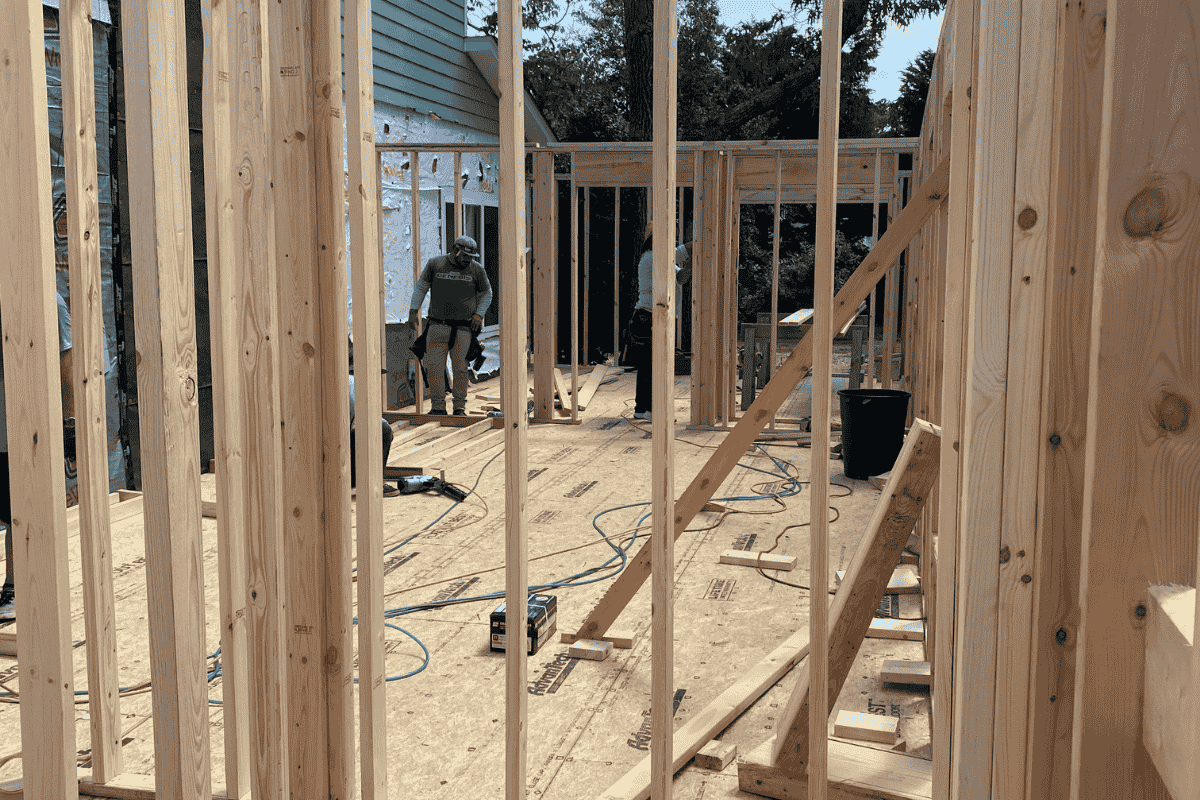
Here’s what nobody wants to tell you upfront: the cheapest addition is rarely the one with the lowest bid. In Dare, Currituck, Camden, and Pasquotank counties, the most cost-effective home addition is the one that’s planned correctly from the start, permitted properly, and built by licensed contractors who know coastal building codes inside and out.
Why Low Bids Cost You More in the Long Run
We’ve been in residential construction since 1998, working on nearly 500 local projects. The homeowners who call us in a panic aren’t the ones who spent what their addition actually required. They’re the ones who hired someone based on the lowest number and are now stuck with unpermitted work, failed inspections, or a half-finished project because the “contractor” disappeared after the first payment. What appears to be the cheapest home edition quote may end up costing you more
Here’s how it usually plays out when you chase the lowest bid:
- You get the work started, then the change orders begin. That $35,000 quote suddenly becomes $50,000 because the contractor “didn’t realize” your foundation needed work, your HVAC couldn’t handle the load, or your septic system needed upgrading. A licensed general contractor should have identified these issues during preconstruction planning. When there are “unknowns”, many licensed professionals will include language within their agreement or estimate that states as much so you are not halfway through framing before learning of a major expense at a minimum.
- The unlicensed builder asks you to pull the permits yourself. This is a massive red flag. They’ll tell you it “saves money” or makes the process “faster.” What they’re really doing is avoiding accountability and shifting all the legal liability onto you. When you pull the permit as the homeowner, you become the legal responsible party for code compliance, inspections, and any problems that arise. If the work fails inspection, it’s your name on the violation. If someone gets hurt on the job site, you could face liability. If the work doesn’t meet code and needs to be torn out and redone, you’re responsible for the cost. Worse, many unlicensed builders will have you pull the permit and then do work that doesn’t match what was submitted for approval. When the inspector shows up, the work fails. Now you’re facing stop-work orders, correction notices, and potentially having to hire a licensed contractor to fix what the unlicensed builder did wrong.
- The work doesn’t pass inspection. Unlicensed builders often don’t understand coastal building codes, wind load requirements, or flood zone regulations. When the inspector shows up, the work fails. Now you’re paying for rework, stop-work order delays, and possibly bringing the entire existing structure up to current code.
- Resale value drops. Unpermitted additions kill resale value. When you go to sell, the appraiser flags the unpermitted space. Buyers sometimes walk away altogether to avoid buying a liability. They may also demand you remove it or get retroactive permits with penalties at your expense. In Currituck County alone, working without a permit adds at least a $50 penalty or 25 percent of the permit cost, whichever is greater.
- The structure fails in a coastal storm. This is the nightmare scenario. An addition that wasn’t engineered for Wind Zone III requirements (110 to 140 mph design wind speeds in Dare County) can fail catastrophically during a hurricane. You’re not just out the money you spent on the addition. You’re dealing with insurance claims, liability, and potential damage to your original structure.
If you can’t afford to do it right with permits, engineering, and licensed trades, you can’t afford to do it at all. That’s not being dramatic. That’s protecting your biggest investment.
What Actually Drives Addition Costs in Coastal NC?
You’ve probably searched “home addition cost” and found numbers that don’t match what contractors here are telling you. National averages don’t account for what it takes to build on the coast. Here’s what makes whole home remodeling and additions more expensive in our market:
- Flood zone elevation requirements. If your property sits in an AE or VE flood zone, any addition must meet Base Flood Elevation standards. That means elevated foundations, pier systems, or specialty slab work that adds cost before you even start framing walls.
- Septic capacity triggers. Adding even one bedroom triggers a septic capacity review. North Carolina requires 120 gallons per day per bedroom. If your current system isn’t sized for the additional load, you’re looking at a tank upgrade or drain field expansion before you can get final approval. Many homeowners don’t discover this until they’re deep into construction.
- Lot coverage limits. Most areas cap lot coverage at 30 percent, though some neighborhoods allow more. If your existing home and driveway already push that limit, a horizontal addition may not be permitted. You’re forced to consider a second story, which costs significantly more, or scale back your plans entirely.
- Setback restrictions. Coastal and waterfront lots have strict setback requirements. That bump-out you’re imagining might violate setbacks, making it impossible even if it looks feasible on paper.
- High water tables and sandy soils. Foundation work on coastal lots often requires additional engineering, deeper footings, or specialty drainage. What works inland doesn’t always work here.
- Wind load engineering. Wind Zone III requires any addition to be engineered to withstand hurricane-force winds. That means PE-stamped structural plans, continuous load paths, enhanced roof attachment, and impact-resistant windows or shutters. This isn’t optional. It’s code.
- Permit and inspection costs. In Currituck County, residential addition permits cost $0.50 per square foot, plus individual trade permits for plumbing, mechanical, electrical, and gas work at $100 each. For a 200-square-foot addition, you’re looking at $100 for the building permit plus $300 to $400 in trade permits.
Smart Strategies for Cost-Effective Home Additions
Cost-effective doesn’t mean cutting corners. It means making informed decisions that deliver the space you need without regret or rework.
Build Out, Not Up
A single-story horizontal addition with a simple rectangular footprint costs less than complex shapes or second stories. Simple designs reduce material waste, simplify roof tie-ins, and speed up framing and finishing.
Building up instead of out typically costs two to three times more. The cost difference comes from foundation reinforcement (most coastal homes weren’t built to support a second story), enhanced structural engineering for wind loads, more complex framing, and the logistical nightmare of working above an occupied first floor.
If your lot allows a horizontal addition, that’s almost always your best value.
Keep the Roofline Simple
A shed roof that ties cleanly into your existing structure costs far less than a gable or hip roof that requires valleys, cricket framing, or custom flashing. Every roof penetration, transition, or directional change adds labor and material costs.
This is where an experienced general contractor saves you money. We know how to design tie-ins that work structurally and aesthetically without creating expensive complications.
Locate Plumbing Strategically
Running plumbing through exterior walls rather than routing it across the house reduces costs and minimizes future leak risks. If your addition includes a bathroom or wet bar, locate it near existing plumbing to avoid long runs and additional venting. Plumbing work for an addition typically costs $4,000 to $15,000 depending on complexity.
Plan HVAC Capacity Upfront
Adding square footage without evaluating your existing HVAC system is one of the most common mistakes we see. If your current system can’t handle the additional load, you’ll face an expensive mid-project upgrade. HVAC extension for an addition typically runs $5,000 to $18,000.
A qualified HVAC contractor can assess capacity during preconstruction planning, not after you’ve already framed walls.
Invest in Preconstruction Planning
This is where you become the hero of your own project.
Preconstruction planning isn’t an expense. It’s an investment that prevents the expensive surprises that blow budgets apart. We’re talking feasibility analysis, site evaluation, accurate cost estimating, and engineering before you break ground.
Here’s what preconstruction planning tells you:
- Whether your lot coverage, setbacks, and zoning allow the addition you’re imagining
- If your septic system can handle additional bedrooms or needs upgrading first
- What flood zone and elevation requirements apply to your property
- Whether your existing foundation and structure can support the addition
- What engineering is required and what it will cost
- A realistic budget that accounts for permits, inspections, and contingencies
When you skip this step to “save time,” you don’t save anything. You just move the delays and cost overruns to the middle of construction when they’re more expensive and stressful to fix.
We’ve been using the same preconstruction process since 1998 specifically to reduce change orders and budget creep. When you understand what’s required before the first shovel hits dirt, you make better decisions and avoid the panic of discovering problems mid-project.
Always Budget for Contingencies
Even with excellent planning, construction projects encounter unexpected issues. Hidden structural problems, code compliance updates, weather delays, and material availability can all affect your timeline and budget.
Industry professionals recommend budgeting an additional 10 to 20 percent for unexpected costs. That contingency fund prevents mid-project financial stress when you discover issues that weren’t visible during planning.
On a $60,000 addition, that means keeping $6,000 to $12,000 in reserve. It’s not wasted money. It’s protection.
Common “cheapest” home addition Mistakes That Derail Addition Projects
After nearly 500 projects, we’ve seen these mistakes repeatedly. Learn from other homeowners’ expensive lessons:
- Hiring based solely on the lowest bid. The lowest number usually means unlicensed subs, shortcuts on materials, or a scope that doesn’t include what’s actually required. You’ll pay the difference in change orders, rework, or fixing problems later.
- Pulling permits yourself for an unlicensed builder. When an unlicensed builder asks you to pull the permit, they’re transferring all legal liability to you. You become responsible for code compliance, inspection failures, and any accidents or problems that occur. If the work doesn’t pass inspection, it’s your name on the violation, and you’re stuck paying to fix it.
- Not pulling permits at all. Unpermitted work creates liability, kills resale value, and often requires expensive retroactive permitting with penalties and forced corrections to current code. It’s never worth the risk.
- Skipping feasibility analysis. Lot coverage, setbacks, flood elevation, and zoning restrictions can make an addition impossible or prohibitively expensive. Finding that out after you’ve spent money on design and paid deposits is heartbreaking and avoidable.
- Ignoring septic capacity. Discovering mid-construction that your septic system can’t support the additional bedroom you just framed is a project-killing surprise. Check capacity before you finalize your design.
- Underestimating site prep costs. Clearing, grading, utility relocation, and temporary services add up quickly on coastal lots. Excavation and site preparation alone can cost $1,500 to $10,000.
- Choosing complex designs to “maximize space.” Complex shapes, multiple roof lines, and intricate tie-ins look impressive on paper but dramatically increase costs. Simple designs deliver better value.
- Not planning for electrical and plumbing realities. Electrical work for an addition runs $3,000 to $12,000, while plumbing can cost $4,000 to $15,000. These aren’t areas where shortcuts pay off.
Why “Cost Per Square Foot” Doesn’t Tell the Whole Story
You want to know the cost per square foot. Every homeowner asks. It’s a reasonable question, but it’s almost impossible to answer accurately without understanding your specific situation. The cheapest home addition can literally vary between neighbors.
Why? Home addition costs depend on how the new structure ties into your existing home, where it ties in, and what mechanical and structural challenges exist. A 200-square-foot addition that ties into an exterior wall with accessible utilities costs dramatically less than the same 200 square feet that requires foundation underpinning, complex roof valleys, HVAC system replacement, and septic upgrades.
Two identical-looking additions on two different properties in the same neighborhood can have wildly different costs because of flood elevation requirements, soil conditions, existing structure limitations, and utility locations.
That’s why preconstruction planning matters. It gives you an accurate budget based on your actual property and existing structure, not generic averages that don’t account for reality.
Second stories aren’t inherently bad decisions. But they’re rarely the cost-effective choice unless your lot physically can’t accommodate a horizontal addition or lot coverage restrictions force you upward.
When Does Full Code Compliance Get Triggered?
This catches homeowners by surprise constantly.
In North Carolina, additions are considered new construction and must comply with current building codes. Depending on the scope and value of your addition, local inspectors may require that certain systems in the existing home be brought up to current code as well, especially if you’re adding significant square footage or altering the structure’s load paths.
Expect questions about:
- Existing electrical panels and grounding
- HVAC system capacity and ductwork
- Insulation and energy code compliance in adjacent spaces
- Egress windows in existing bedrooms
Your local building department determines when broader compliance is required. A licensed general contractor knows how to navigate these requirements and budget for them upfront.
How to Move Forward Without Getting Burned
Start with feasibility, not design. Don’t fall in love with a floor plan before you know if it’s even possible on your lot.
Ask these questions first:
- Does your lot allow the addition you’re imagining (coverage, setbacks, height)?
- Can your septic system handle additional bedrooms, or will you need an upgrade?
- What are the flood zone and elevation requirements for your property?
- Can your existing foundation, structure, and HVAC support the addition?
- What will permits and engineering actually cost?
- What’s a realistic timeline that accounts for permit review, inspections, and weather?
A qualified general contractor who’s been working in Dare, Currituck, Camden, or Pasquotank County for years can walk you through these questions during a preconstruction planning phase. This isn’t a sales conversation. It’s due diligence that determines whether your project is feasible and what it will actually cost.
Once feasibility is clear, you can make informed decisions about size, design, and budget. You’ll know whether a 200-square-foot addition fits your lot and budget, or whether a smaller, better-planned space delivers more value. You’ll understand what engineering is required, what permits cost, and what timeline is realistic.
The best-value addition is the one that’s designed right, permitted properly, and built by licensed, insured general construction contractors who’ve worked together before. The cheapest home addition can be the most costly if you skip these important steps. It’s the addition that passes inspection the first time, adds real value to your home, and doesn’t require expensive fixes two years later.
The cheapest home addition is one that is well-planned, designed & permitted …Ready to Talk Through Your Specific Situation?
If you’re thinking about a home addition in Dare, Currituck, Camden, or Pasquotank County and want to understand what’s feasible and what it will actually cost, we’d be happy to walk through it with you. Reframing how your question about the cheapest home addition into what can I do bring real value and solve problems in my existing home is a better start.
We’ve been licensed general contractors since 1998, working on home additions, whole home renovations, and accessory dwelling units across the Outer Banks and surrounding areas. We use the same person from first call through final inspection, and we work with long-standing, insured subcontractors we trust. We offer in-house design services for many projects and emphasize preconstruction planning so you know exactly what you’re getting into before the first permit is pulled.
Submit a project inquiry and let’s talk through your options. No pressure, just a planning conversation about what makes sense for your property and budget.